Your calves help move blood back toward your heart, pull glucose out of circulation, and keep you steady on your feet. That is quite a job description for muscles most of us barely think about.
And chances are, we are underusing them. Hours at a desk, on the couch, or sitting in traffic leave an important system largely idle. The good news is that putting it to work does not always require a hard workout. Even a simple seated movement can have surprisingly large metabolic effects.
But there are some important details behind those results. A few heel raises are not the same as the sustained exercise used in a laboratory, and seated exercise is not a reason to give up walking.
Key Takeaways
- Calf contractions help push blood from your legs back toward your heart.
- Sustained soleus push-ups reduced glucose and insulin responses compared with sitting still in small studies.
- Walking, movement breaks, calf strengthening, and balance practice address different aspects of calf function.
Table of Contents
- Why Your Calves Are Called Your Second Heart
- The Soleus: A Small Muscle With Surprising Metabolic Effects
- How Calf Contractions Help Lower Blood Sugar
- Your Soleus Is Also a Stabilizer
- Three Ways to Keep Your Calves Working as You Age
- Give Your Second Heart Something to Do
Why Your Calves Are Called Your Second Heart
Your heart sends blood down to your legs through your arteries. Getting that blood back is a different challenge: it travels through veins at much lower pressure and has to move upward against gravity.
Your calf muscles help solve that problem. When they contract, they squeeze the deep veins in your legs, helping push blood toward your heart. Walking is not just transportation. It also activates your calf muscle pump.
Valves inside the veins help keep blood moving in the right direction rather than slipping back toward your feet. When those valves become leaky, blood can pool, and the veins can swell and become varicose. Regular calf contractions help move blood upward.
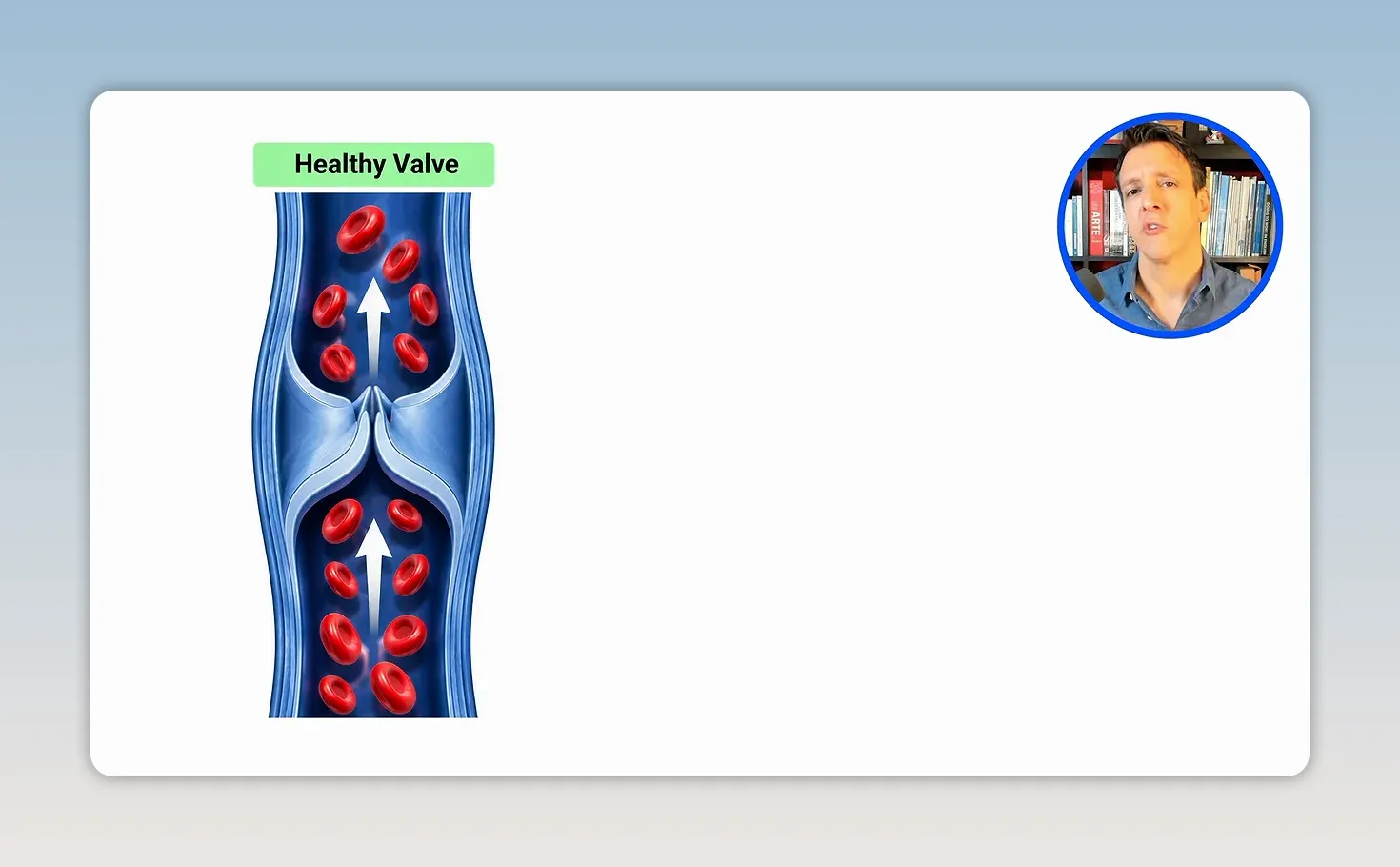
Unlike your heart, though, this muscle pump depends on movement. Sitting still for hours means you are making very little use of it. That is one reason ordinary, frequent movement matters, even if you already go to the gym.
The Soleus: A Small Muscle With Surprising Metabolic Effects
We tend to talk about the calf as if it were one muscle, but two major muscles deserve attention:
- Gastrocnemius: the prominent muscle that gives the calf much of its visible shape.
- Soleus: the muscle underneath it, mostly hidden from sight.
The soleus is particularly interesting because it is built for endurance. About 88% of its fibers are type I, or slow-twitch fibers. These are not designed for explosive efforts. They are designed to keep working for long periods without tiring quickly.
That makes sense when you consider one of its everyday jobs: helping you stay upright. But it also makes the soleus an intriguing muscle to recruit while you would otherwise be sitting still.
How to Do a Soleus Push-Up
A soleus push-up is essentially a seated calf raise. The basic movement looks like this:
- Sit in a chair with your feet on the floor.
- Keep your knees bent at an angle slightly tighter than 90 degrees.
- Lift your heels while keeping the fronts of your feet on the floor.
- Lower your heels and repeat.
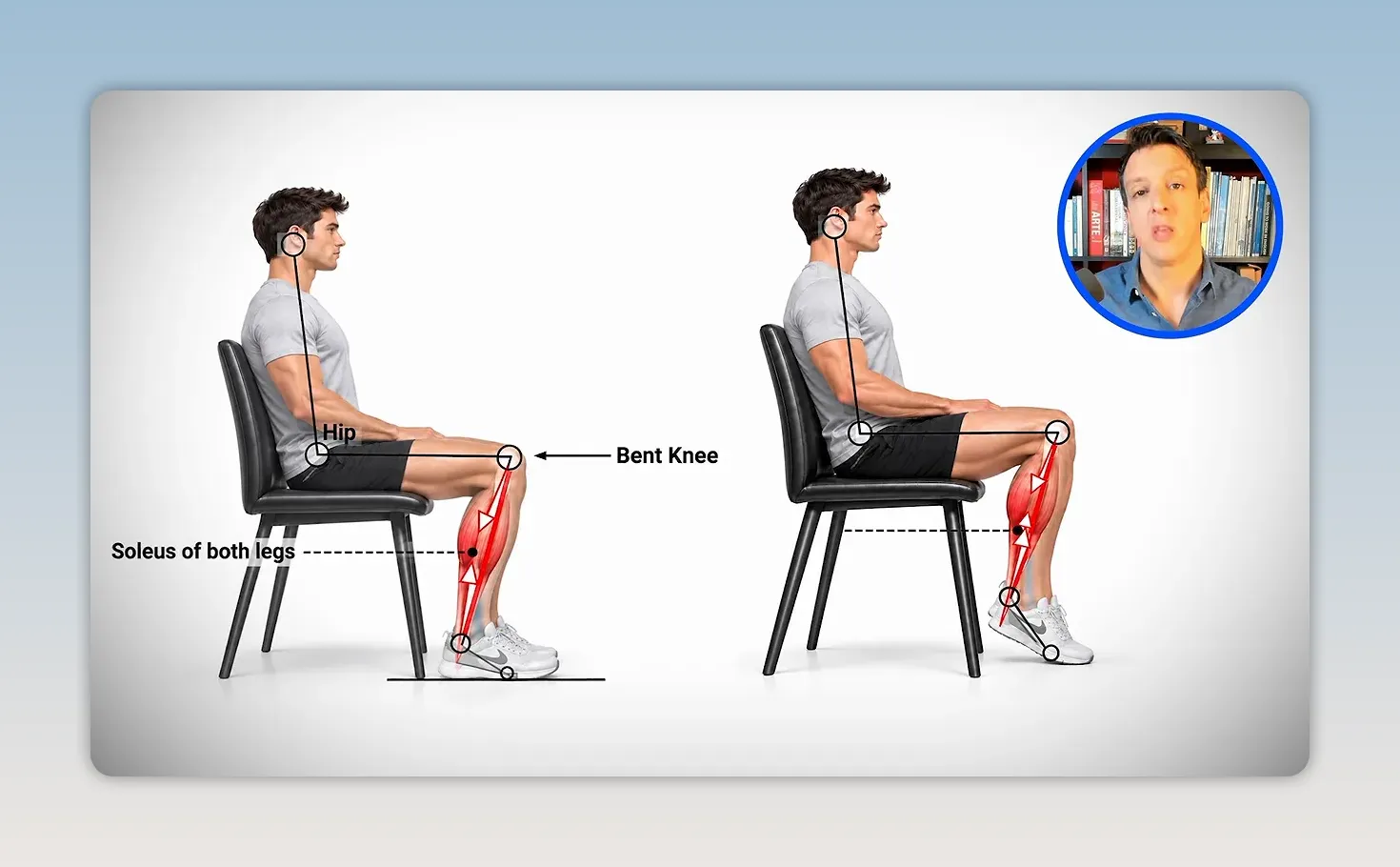
Standing calf raises recruit the gastrocnemius as well as the soleus. Bending the knees in the seated position reduces the gastrocnemius contribution, shifting much more of the work to the soleus.
In the research discussed here, participants used no added weights, just the natural weight of their legs. But they performed the movement continuously, at roughly one repetition per second, for prolonged periods. The duration matters. This was not half a dozen repetitions between emails.
How Many Calories Did It Burn?
When I first encountered this research, I expected the energy expenditure to be tiny. After all, walking and running involve dozens of muscles. How could working mainly the soleus come anywhere close?
The comparison in the soleus push-up study surprised me:
- Walking: about 4 calories per minute of total aerobic energy expenditure.
- Running: about 12 calories per minute.
- Continuous soleus push-ups: almost 3 calories per minute, roughly two-thirds of the walking value.
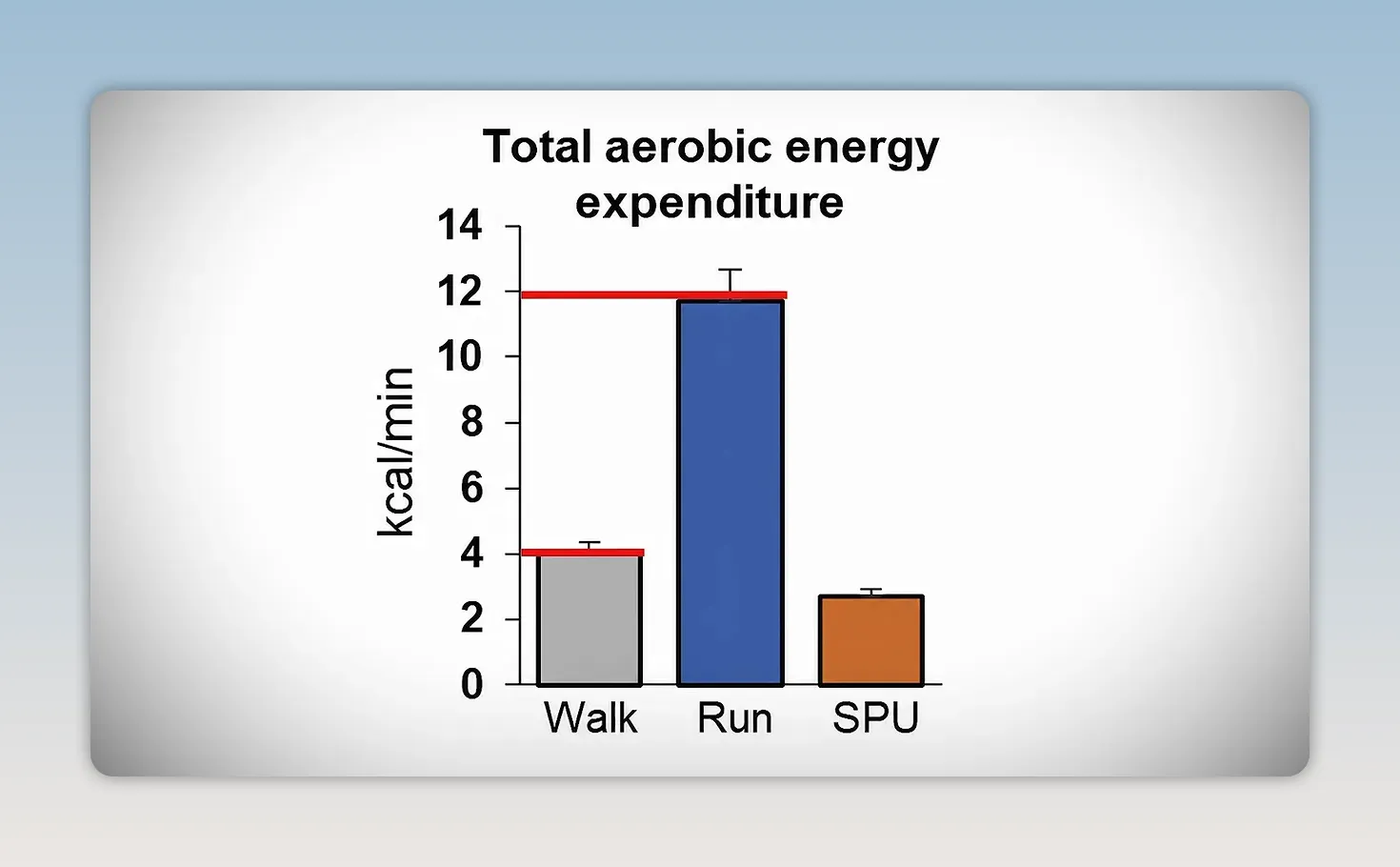
That last detail is important. These numbers include the energy needed to maintain the body, not just the extra calories attributable to the exercise. So we should not interpret the comparison as showing that soleus push-ups deliver two-thirds of all the benefits of walking.
Still, the result is striking for such a low-intensity movement. It can fit into a meeting, desk work, or a train ride without feeling like a conventional workout.
The useful comparison is soleus push-ups versus sitting motionless, not soleus push-ups instead of walking. A walk or a run offers broader benefits. Do not stop walking to spend more time doing seated heel raises. But when walking is not possible, this may be a useful way to make seated time more active.
How Calf Contractions Help Lower Blood Sugar
Muscles need fuel to contract, and some of that fuel can come from glucose circulating in your blood.
Contraction prompts glucose transporters called GLUT4 to move to the surface of muscle cells. Think of them as doors that let glucose enter the muscle from the bloodstream.
Importantly, muscle contraction can stimulate glucose uptake through a signal that does not depend on insulin. That is particularly relevant when insulin production or insulin action is impaired, as can occur in diabetes. It also helps explain why walking after a meal is such a common recommendation.
What the Blood Sugar Experiment Found
Researchers gave participants a sugary drink and followed their blood glucose and insulin responses over several hours. During that period, participants either remained seated without the exercise or performed sustained soleus push-ups.
With soleus push-ups, the study reported:
- About 50% less of a rise in blood glucose.
- About 60% less of a rise in insulin.
Those percentages describe smaller responses to the glucose drink compared with sitting still. They do not mean blood sugar dropped by half from its starting level.
Differences were already apparent around 30 to 45 minutes, when blood glucose was approaching its peak. But the experiments continued for hours. Again, the intervention was prolonged muscle activity, not a quick set of heel raises.
The original study was small, so it is worth keeping the findings in perspective. Other studies, including research in people with prediabetes, have also reported reduced post-meal glucose responses with soleus push-ups. The results are promising, particularly for people who cannot readily take a walk after eating.
The practical message is not that a seated exercise replaces diabetes care. It is that low-effort muscle activity can be metabolically meaningful, even when it does not leave you breathless.
Your Soleus Is Also a Stabilizer
The circulation and blood sugar effects are fascinating. But the soleus has another role that may be even more important as we age: balance.
When you stand, your body is not perfectly still. The soleus makes tiny, ongoing corrections that help keep you upright. You generally do not notice this work, but it is happening in the background.
Balance often deteriorates with age, and falls are a major cause of disability and death in older adults. Keeping the calves healthy is therefore about much more than appearance or gym performance.
It is easy to focus on bigger biceps or broader shoulders and forget the muscles underneath us. But a strong tree needs strong roots. Your calves are part of those roots.
Three Ways to Keep Your Calves Working as You Age
1. Walk More, Starting Where You Are
I used to drive to the gym to build muscle, even though the gym is only about 1.2 kilometers from my home. Eventually, I realized I was passing up a simple opportunity to move.
Now I walk there and back. That adds at least 2.4 kilometers of walking on most days I go, and I have grown to love it. I also try to take the stairs whenever I can.
That does not mean 2.4 kilometers needs to be your starting point. If you rarely walk, a trip around the block may be an excellent first goal. Start with your current capacity and build gradually.
2. Interrupt Long Periods of Sitting
Exercise sessions matter, but so does what happens between them. Get up, walk around, and move your legs. If you can take a phone call while walking, that is an easy opportunity.
Research on breaking up prolonged sitting shows that short movement breaks can reduce post-meal glucose and insulin responses.
In one study discussed here, people with type 2 diabetes interrupted sitting every 30 minutes with about six minutes of low-intensity activity, such as calf raises or half squats. Those breaks reduced glucose and insulin exposure after a meal compared with uninterrupted sitting.
If you cannot get up, perhaps because you are in a long meeting or on an airplane, seated soleus push-ups offer another option. They are discreet, low intensity, and compatible with continuing your work.
3. Train Both Calf Strength and Balance
Dedicated calf training is useful, too. I train mine about once or twice a week. Two exercises I like are:
- Single-leg standing calf raises, placing the load on one leg at a time.
- Calf presses on a leg press machine.
But strength is not the whole story. Two types of training specifically challenge your ability to stay steady.
Perturbation Training: Practice Recovering Your Balance
A perturbation is a small disturbance that throws you slightly off balance. The training involves responding to that disturbance and regaining stability.
One example is standing on one leg while a partner gently nudges your shoulder. A balance board with a rounded underside is another way to introduce instability.
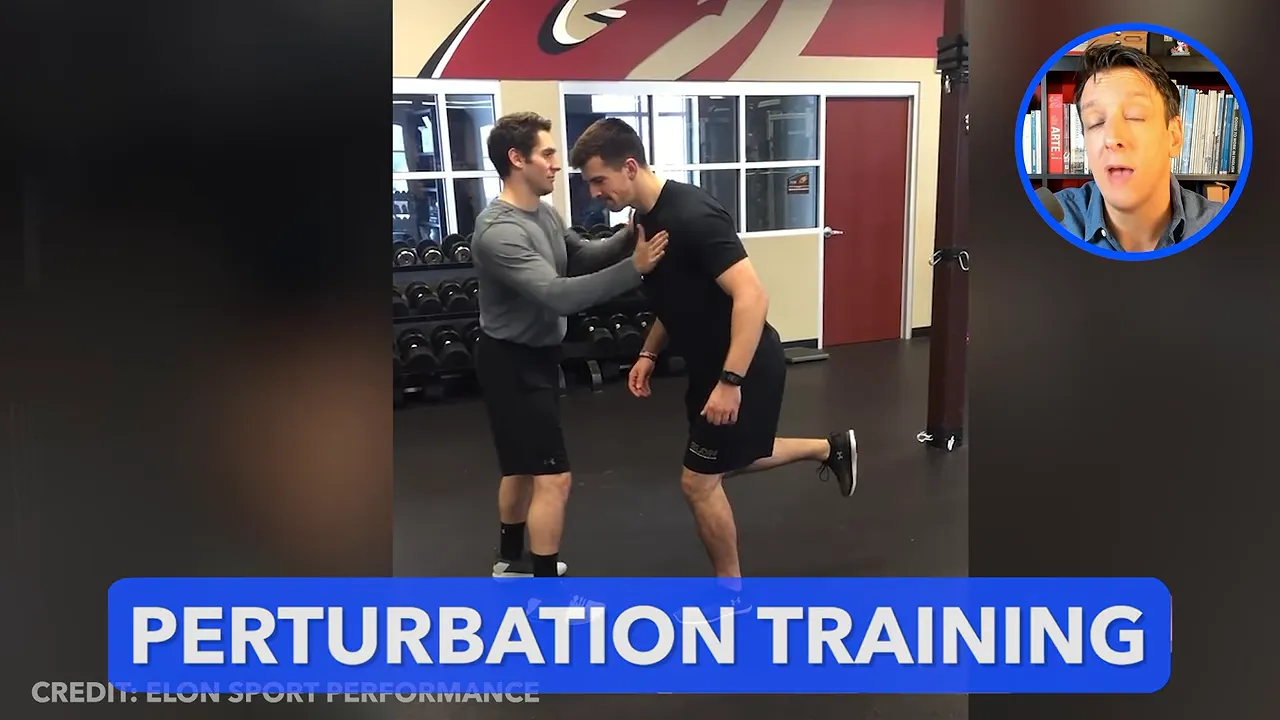
The goal is a controlled challenge, not a fall. Match the difficulty to your ability, and seek appropriate professional guidance if your balance is impaired or you are at risk of falling.
Dual-Task Training: Balance While Doing Something Else
In daily life, staying balanced rarely happens in isolation. We walk while looking around, carrying things, or having a conversation. Dual-task training combines a balance challenge with another activity.
Examples include:
- Walking in a straight line while turning your head from side to side.
- Walking while tossing a small ball between your hands.
- Standing on one leg while tossing a ball, if an easier version is comfortable.
- At a standing desk, balancing on one foot while talking on the phone or typing, as your ability allows.
Choose a challenge you can manage safely rather than jumping straight to the hardest version.
Give Your Second Heart Something to Do
Your calves are a blood pump, a source of glucose uptake, and part of your balance system. They deserve more attention than they usually get.
The approach is straightforward: walk more, break up sitting, and include calf strength and balance work. When you have to remain seated, repeated soleus contractions can turn otherwise motionless time into an opportunity for movement.
No single exercise replaces all the others. But these small, regular opportunities add up to a much better use of muscles that are already built to keep working.
This information is educational and does not replace medical advice, diagnosis, or treatment. Discuss exercise changes with your healthcare professional if you have a medical condition or concerns about what is safe for you.


