About one in three people worldwide have fatty liver, and it often comes with no warning signs. You can have it for years without knowing. If it progresses, fatty liver is associated with a higher risk of insulin resistance, diabetes, heart disease, and even liver cancer.
We have effective ways to reduce liver fat, but the first step is knowing whether it might be there.
Imaging can help answer that question. But for a quick first pass, there is a free calculation you can do at home in about five minutes, provided you already have the necessary blood test results. It is called the Fatty Liver Index, or FLI. You need a measuring tape, your height and weight, and two blood work values.
The important distinction: this estimates your likelihood of having fatty liver. It does not diagnose it or measure how much fat your liver contains.
Key Takeaways
- The Fatty Liver Index combines body measurements and two blood markers to estimate fatty liver likelihood.
- Scores below 30 suggest lower likelihood, while scores above roughly 55 or 60 suggest higher likelihood.
- The result is an estimate, not a diagnosis, and can guide a conversation with your doctor.
Step 1: Gather the Five Values You Need
The calculator uses five inputs:
- Height
- Weight
- Waist circumference
- Triglycerides
- GGT, a liver enzyme measured in blood
Your height and weight are used to calculate your body mass index, or BMI. Yes, BMI is an imperfect metric. But here, it is not being used on its own. Combined with waist circumference and the two blood markers, it helps estimate the likelihood of fatty liver.
Measure Your Waist in the Right Place
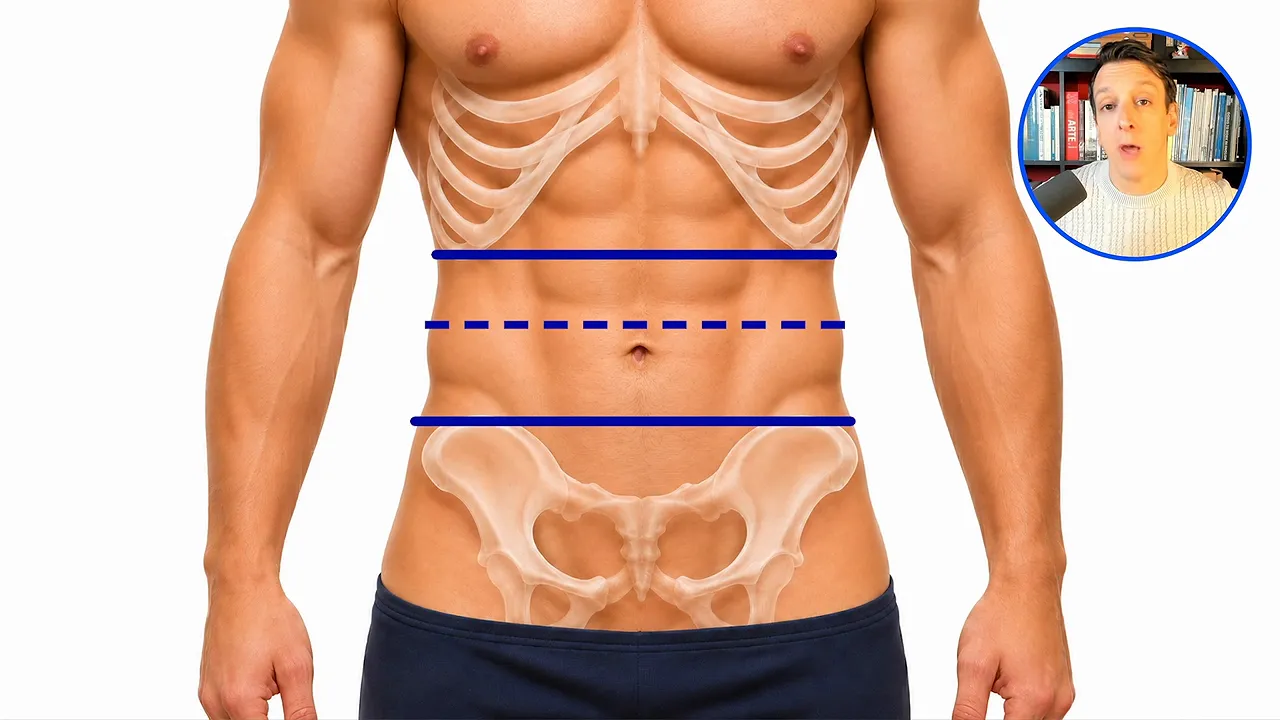
Waist circumference is worth getting right. Take a flexible measuring tape and measure around your waist midway between the bottom of your ribs and the top of your hip bone. This is usually a little above your belly button.
- Keep the measuring tape level around your body.
- Breathe normally.
- Do not suck in your stomach. No cheating.
- Write down the measurement and its units.
The calculator lets you choose different units, including centimeters or inches for your waist. Make sure the selected unit matches what you actually measured. A perfectly good measurement entered with the wrong units will not give you a useful estimate.
Find Triglycerides and GGT on Your Blood Work
The final two inputs come from blood tests. Look for triglycerides and GGT on your lab reports.
GGT stands for gamma-glutamyl transferase. You will usually see the abbreviation rather than the full name. It is a commonly measured liver enzyme, so you may already have a result if you have had liver blood tests. Check that both values are available before you start.
Step 2: Calculate Your Fatty Liver Index
Enter those five values into the free online calculator, selecting the appropriate units for each. It handles the math and returns your Fatty Liver Index.
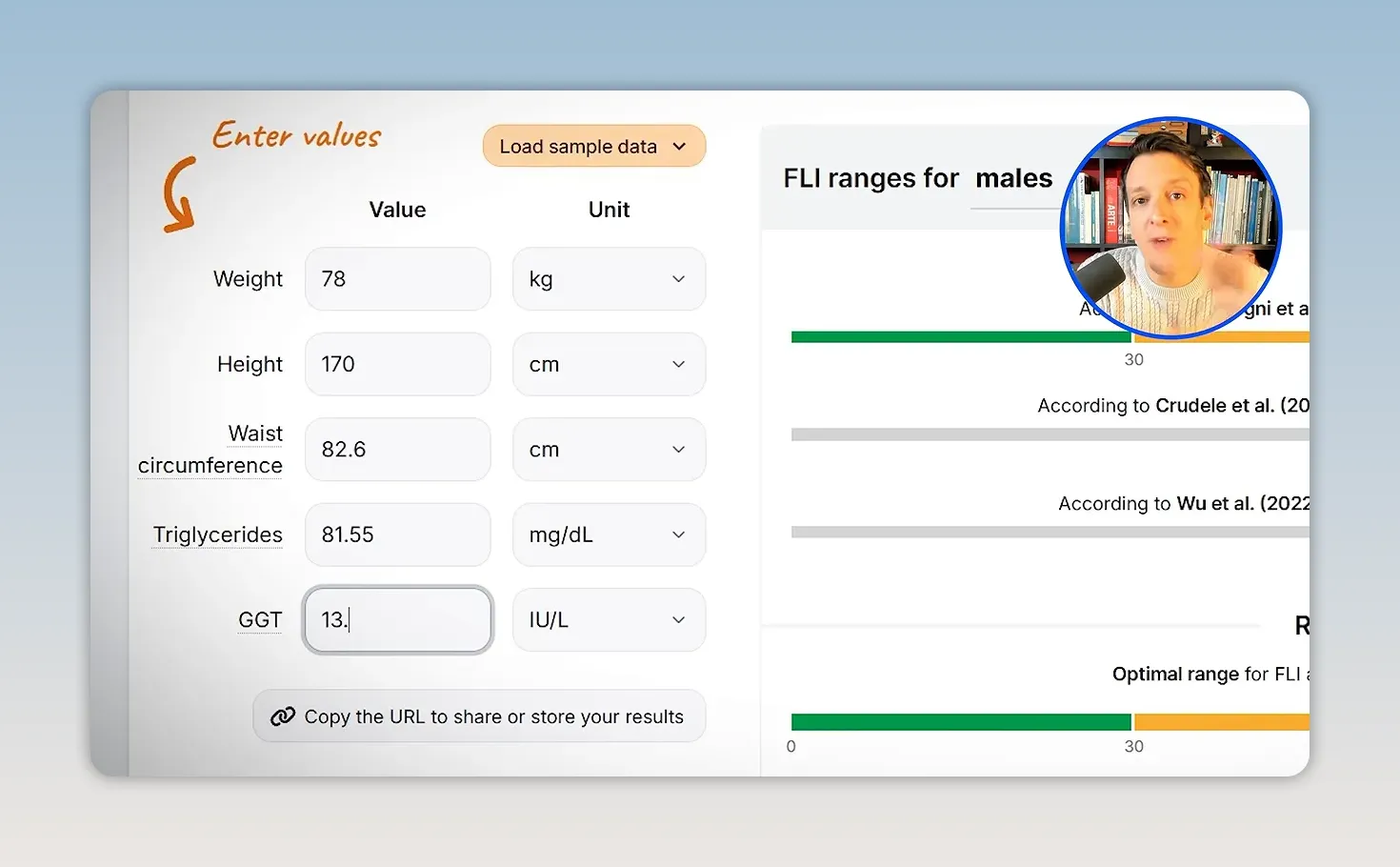
The index comes from a combination of body measurements and blood markers, rather than any single result. For the research behind it, see the original Fatty Liver Index study.
|
Step 3: Understand Your Result
Once you have your number, what does it mean? Think of it in three broad ranges, with an important qualification: the upper cutoff varies somewhat between studies.
Below 30: Fatty Liver Is Less Likely
Under 30 is generally where you want to be. Your likelihood of having fatty liver is lowest in this range. Mine is around 20, so if yours is lower, you have some bragging rights.
Still, a low result is not a guarantee that you do not have fatty liver.
From 30 to Roughly 55 or 60: The Gray Area
Some studies use an upper cutoff of 55; others use 60. Between 30 and that upper threshold, the result is less clear.
Fatty liver is possible in this range. There may also be room to improve some of the underlying metrics. The score is useful information, but it does not settle the question by itself.
Above Roughly 55 or 60: Fatty Liver Is More Likely
Above the upper threshold, you are in a higher-likelihood range. In general, the higher your Fatty Liver Index, the more likely it is that you have fatty liver.
That is a reason to follow up, not a diagnosis to make on your own.
Use the Result to Start a Conversation With Your Doctor
The Fatty Liver Index is not as precise as assessing your liver with imaging. It is possible to have a low score and still have fatty liver, or a high score without having it. The calculation also does not tell you exactly how much fat is present.
Its value is as a quick, accessible first-pass estimate that you can bring to your doctor. If your result concerns you, a reasonable question is whether an ultrasound or another assessment would be appropriate to check further.
Use the number as a starting point, not the final answer. It can help you recognize a potential issue that otherwise might remain silent and give you something concrete to discuss with your healthcare provider.
This information is educational and is not a substitute for medical advice, diagnosis, or treatment. Discuss concerns and test results with a qualified healthcare professional.


