Finding sensible diet advice can be frustrating. Everyone seems convinced their favorite diet is the best, and confidence often runs well ahead of the evidence.
The reality is less dramatic, but more useful: every diet has downsides, and no diet is right for everyone. The goal is to find a pattern that fits your health needs, provides the nutrients you need, and is realistic for you to maintain.
My rankings consider three things: demonstrated health effects, the strength of the scientific evidence, and how doable the diet is in real life. These are approximate personal assessments, not validated scientific scores. A lower score sometimes means less evidence, not necessarily a less healthy diet.
With that in mind, here is how Mediterranean, DASH, low-fat, pescatarian, vegetarian, vegan, paleo, keto, and carnivore diets stack up.
Key Takeaways
- Diet rankings should consider demonstrated benefits, evidence strength, and the ability to maintain the pattern.
- Mediterranean eating combines strong long-term cardiovascular evidence with relatively flexible food choices.
- Food quality and nutrient adequacy matter more than simply excluding fat, carbohydrates, or animal foods.
- Keto has condition-specific potential, while carnivore lacks solid evidence supporting long-term use.
Table of Contents
- Mediterranean Diet: About 8/10
- DASH Diet: About 6.5/10
- Low-Fat Diets: About 5 to 5.5/10
- Pescatarian Diet: About 6/10
- Vegetarian and Vegan Diets: About 6 to 7/10
- Paleo Diet: About 5 to 5.5/10
- Ketogenic Diet: About 5 to 6/10
- Carnivore Diet: About 2 to 3/10
- Choose the Foods, Not Just the Diet Label
Mediterranean Diet: About 8/10
The Mediterranean diet is a strong general choice, particularly for heart health. It is also the least restrictive pattern on this list, which can make it easier to maintain.
In research, “Mediterranean” usually describes a pattern built around:
- Vegetables, fruits, legumes, and whole grains.
- Nuts, seeds, and liquid oils such as olive oil.
- Fish and seafood, with some dairy and poultry.
- Less red and processed meat, refined carbohydrates, and highly processed food.
This does not mean everyone living around the Mediterranean eats this way, either historically or today. It is the name researchers use for this particular dietary pattern.
Why the evidence stands out
We have three long randomized trials examining cardiovascular outcomes, and all three found benefits. That is unusual in nutrition research.
A trial published in 2022 assigned about 1,000 people with established heart disease to a Mediterranean or reduced-fat diet and followed them for seven years. The Mediterranean group had 28% fewer combined cardiovascular events. That is a relative reduction in the combined outcome, not a guarantee that every individual type of event fell by that amount.
Related research also found that plaque in the neck arteries became thinner over time with the Mediterranean pattern, but not with the reduced-fat comparison. Some Mediterranean diet trials have reported improvements in cognitive function as well.
A meta-analysis of randomized dietary trials found lower overall mortality with Mediterranean programs compared with minimal intervention. The comparison matters: beating a typical, often unhealthy diet does not establish superiority over every other well-designed diet.
The limitations
The label is not magic. Pouring olive oil over a hot dog does not turn it into a Mediterranean meal.
You can also overeat and gain weight on a Mediterranean diet. Food quality and total intake still matter.
My assessment: about 8/10, reflecting substantial randomized evidence, demonstrated cardiovascular benefits, and reasonable flexibility. For someone looking for a broadly healthy starting point without eliminating entire food groups, it is a good option.
DASH Diet: About 6.5/10
If blood pressure is your main concern, DASH deserves particular attention. It shares many features with Mediterranean eating, with an increased emphasis on potassium-rich foods and often a moderate sodium intake.
Randomized trials show that DASH lowers blood pressure. A small randomized trial also reported regression of non-calcified coronary plaque. This is clinically interesting because non-calcified plaque can include vulnerable plaque that may rupture and trigger a heart attack.
What DASH lacks is the same body of long randomized trials examining heart attacks and deaths that we have for Mediterranean diets. Lower blood pressure is valuable, but it is not the same endpoint as demonstrating fewer cardiovascular events over many years.
My assessment: about 6.5/10. That does not mean DASH is necessarily less healthy than Mediterranean eating. It means we have less direct evidence for those major long-term outcomes. For someone with high blood pressure, it is a reasonable alternative.
Low-Fat Diets: About 5 to 5.5/10
Low-fat diets are not one thing. They range from modest fat reduction to very-low-fat patterns providing less than 10% of calories from fat.
Their popularity has fallen since the 1990s, but dismissing them as an outdated fad misses some interesting evidence.
What the trials show
The mortality meta-analysis discussed above also found benefits from low-fat dietary programs compared with minimal intervention. Its comparisons did not establish a significant mortality difference between Mediterranean and low-fat programs. That is not proof they are identical, but it does mean there was no clear winner for that outcome.
Also, the “reduced-fat” comparison diets in Mediterranean trials are not necessarily very low in fat. The difference may be around 40% versus 32% of calories from fat, with other food differences between the groups. Those trials do not isolate dietary fat percentage.
In one large eight-year trial, participants were asked to reduce fat intake substantially, but the achieved reduction was much smaller than intended, roughly eight percentage points rather than twenty. Blood markers changed little, and there was no significant reduction in stroke or overall cardiovascular disease. That tells us something about both the modest dietary change achieved and the challenge of adherence.
The famous Ornish lifestyle trial tested a vegetarian diet with less than 10% of calories from fat, alongside other lifestyle changes. Narrowed artery segments became wider, and combined cardiovascular events, including cardiac hospitalizations, were lower.
Promising? Yes. Definitive proof that avoiding fat reverses plaque? No. Only about 20 people per group completed the trial, exercise and smoking behavior also changed, and a wider artery opening could reflect plaque reduction, artery dilation, or both.
Shorter trials of low-fat vegan diets generally report improvements in weight, cholesterol, insulin resistance, liver fat, and hemoglobin A1c in people with diabetes. Comparisons vary from no dietary change to guideline-based diets.
The challenge is separating the ingredients of the intervention. If a diet becomes low-fat, vegan, and based on whole foods simultaneously, which change is responsible for the benefit? We cannot cleanly tell.
What I would change
Restricting all fat can remove ice cream, fries, and bacon. But it can also remove walnuts, flaxseeds, olive oil, and yogurt. That is the double-edged nature of elimination diets: useful foods can disappear alongside less healthy ones.
Many people also find very-low-fat eating difficult to maintain. A diet can look wonderful on paper, but if you cannot sustain it, you will not sustain its benefits.
If you prefer a low-fat pattern, I would prioritize:
- Carbohydrate quality: choose whole-food carbohydrate sources rather than filling the gap with refined carbohydrates.
- Essential fats: make sure your diet still supplies them.
- Long-chain omega-3s: consider whether an algae-derived source of EPA and DHA would be useful.
My assessment: about 5 to 5.5/10. A low-fat diet can be healthy and useful for weight loss in some people. But there is no general scientific requirement to avoid every type of dietary fat, so I would not recommend that as the default.
Pescatarian Diet: About 6/10
A pescatarian diet removes meat from land animals but keeps fish and seafood. A well-designed version can look very similar to Mediterranean eating, with plenty of fiber-rich plant foods and healthy fats.
Fish provides protein, vitamin B12, and iodine, while fatty fish is a useful source of long-chain omega-3s.
Observational research has associated pescatarian patterns with lower overall mortality compared with omnivorous diets. But we have relatively little randomized trial evidence specifically testing pescatarian eating. Observational associations cannot establish that the diet itself caused the difference.
It is also clearly not a fit for someone with a fish or seafood allergy, or someone who simply dislikes those foods.
My assessment: about 6/10. I suspect a healthy pescatarian diet may be about as beneficial as a Mediterranean pattern because they overlap so much. The lower score mainly reflects the thinner evidence base. It is an appealing option for someone who wants to avoid meat without eliminating all animal protein.
Vegetarian and Vegan Diets: About 6 to 7/10
Vegetarian diets exclude meat and fish but retain eggs and dairy. Vegan diets exclude all animal foods, including eggs and dairy. Veganism can involve much more than diet, but the question here is nutritional health.
Well-designed versions eliminate foods such as bacon and hot dogs while increasing vegetables, fruits, whole grains, legumes, and, for vegetarians, potentially fermented dairy. The key phrase is well-designed.
Weight, cholesterol, and blood sugar
Randomized trials commonly find lower cholesterol, and sometimes lower body weight, on vegetarian and vegan diets.
A meta-analysis in people with overweight or diabetes found that vegan interventions reduced body weight by about four kilograms relative to comparison diets, alongside improvements in BMI, hemoglobin A1c, total cholesterol, and LDL cholesterol. It did not find significant effects on blood pressure, triglycerides, or HDL cholesterol.
The comparison diets included both unchanged habitual diets and guideline-based diets, so these were not all the same experiment.
An interesting trial in identical twins compared healthy vegan and healthy omnivorous diets. On average, the vegan twins lost more weight and had greater reductions in LDL cholesterol and fasting insulin.
Identical twins help reduce genetic differences between groups, but the trial still had limitations: only 22 pairs, eight weeks of follow-up, and no calorie matching. Participants could eat freely, and those eating vegan consumed fewer calories. That makes it difficult to separate food composition from the effects of lower energy intake and weight loss.
Cancer and cardiovascular disease
Observational studies generally associate vegetarian patterns with lower cardiovascular risk and lower risk of some cancers.
A meta-analysis of cancer outcomes found that vegetarian diets were associated with lower total cancer risk and seven specific cancer types, including colorectal, pancreatic, and breast cancer. Vegan diets were associated with lower total cancer and breast cancer risk.
Those comparisons were with non-vegetarians and non-vegans, respectively. They are associations, not randomized evidence that removing animal foods prevents those cancers.
Nutrients that need attention
These diets require planning, especially vegan diets. The main considerations are:
- Vitamin B12: a B12 supplement is an important part of a vegan diet.
- Vitamin D: ensure an adequate source, such as fortified foods or a supplement, particularly when sun exposure is limited.
- Calcium: useful sources include calcium-fortified plant milks, seeds, and low-oxalate greens such as kale and collard greens.
- EPA and DHA: these long-chain omega-3s may warrant attention.
- Iron: vitamin C helps increase absorption of the form of iron found in plants.
- Iodine: make sure there is a reliable source, especially if you also reduce or eliminate iodized salt.

Vegan diets have been associated with higher fracture risk. Lower average calcium and vitamin D intake may contribute, and lower average BMI may also play a role. That is a reason to plan carefully, not to assume every vegan diet produces the same outcome.
Protein usually gets the most attention, but it is often less problematic than people expect. A varied diet containing beans, lentils, and soy foods can provide plenty. Amino acid contributions balance across the overall diet.
Randomized muscle-growth trials also suggest that plant and animal protein can produce similar results when total protein intake is adequate.
What about depression and stroke?
Some observational studies associate vegan diets with depression, but randomized trials generally do not show worsening, and one reported improvements in depressive symptoms. The evidence remains limited, so a causal claim is not justified in either direction.
A large observational study also linked vegetarian eating with hemorrhagic stroke. However, a meta-analysis combining 13 prospective studies did not find a significant association between vegetarian or vegan diets and stroke. It did find lower total cardiovascular disease and ischemic heart disease risk with vegetarian diets.
The biggest mistake: assuming vegan means healthy
“Vegan” tells you what someone does not eat. It does not tell you what they do eat. Chips and soda qualify.
I would build these patterns around whole foods, include adequate protein-rich foods, and deliberately cover the nutrients above. Cultural habits and food preferences also matter because some people find these diets difficult to sustain.
My assessment: about 6 to 7/10. They may be excellent choices for people motivated by health, ethics, or environmental concerns. Their generally lower carbon footprints and ethical considerations are relevant to many people, but these scores assess nutrition and health evidence. Compared with Mediterranean eating, we have less long-term randomized outcome data and a greater need for specific nutrient planning.
Paleo Diet: About 5 to 5.5/10
Low-carb diets span a wide range, from moderate carbohydrate reduction to extremely restrictive patterns. Paleo, keto, and carnivore illustrate increasingly restrictive approaches, although paleo is not necessarily ketogenic.
Paleo typically emphasizes vegetables and animal foods in relatively natural forms while excluding grains, legumes, and dairy.
The historical name is imperfect: our ancestors did consume grains and legumes. But whether the name is accurate is separate from whether the modern diet is beneficial.
Randomized trials generally report weight loss, especially early on, and lower triglycerides. Most are short, although a few extend to one or two years. Comparison diets often include Nordic or guideline-based patterns. The early weight advantage tends to become less impressive over time.
The major gap is long-term outcomes. We do not have good paleo trial data on heart attacks, cancer, mortality, or changes in arterial plaque over many years.
Appealing to ancestral health does not fill that gap. We do not know the relevant disease risks among our ancestors who reached their 50s, 60s, and beyond.
My assessment: about 5 to 5.5/10, largely because long-term consequences remain uncertain.
Ketogenic Diet: About 5 to 6/10
Keto takes carbohydrate restriction much further, generally below 10% of total calories. This promotes the production of ketone bodies by the liver, which the body can use for fuel.
It has an established medical role in reducing seizures in some people with epilepsy who do not respond adequately to medication. For other conditions, the evidence ranges from useful short-term findings to very preliminary research.
Weight loss and metabolic effects
Randomized trials commonly find weight loss and reductions in triglycerides and blood glucose, sometimes accompanied by lower blood pressure.
As with paleo, differences often shrink over time, though not always. LDL cholesterol and apoB sometimes rise. That varies between individuals and depends importantly on how the diet is constructed.
A recent trial comparing diets for liver health reported a 45% reduction in liver fat with Mediterranean eating and a 67% reduction with keto. Other liver-health measures also improved more with keto.
The participants had obesity and prediabetes. Keto retained an advantage after accounting for weight loss, which makes the finding particularly interesting. But the trial was tiny, with about 14 people per group, and protein intake was higher in the keto group. We still need to work out how much of the difference comes from carbohydrate restriction, protein, or other features.
Research into cognition in Alzheimer’s disease and symptoms of depression is also promising but incomplete. Cancer research is even more preliminary. These areas should not be presented as established uses comparable to keto’s role in epilepsy.
What we do not know
Most keto trials are short. We do not know what ten years of keto does to heart attack, cancer, or mortality risk.
Large observational studies sometimes examine lower-carbohydrate eating and mortality, but their “low-carb” groups often consume 30% to 40% of calories from carbohydrate. Those are not ketogenic diets.
These studies commonly find that the foods replacing carbohydrate matter. Plant-based replacements tend to be associated with lower mortality than animal-based replacements. Fat quality is one possible explanation, but observational limitations remain, and these findings cannot directly answer the long-term keto question.
Adherence is another limitation. Some people appreciate strict rules because they reduce decisions and opportunities to stray. Most people, however, find keto difficult to maintain long term.
Fat quality can change the picture
A diet centered on bacon, lard, fatty meat, and coconut oil is not the same nutritional proposition as one emphasizing olive oil, nuts, seeds, yogurt, and salmon, even if both produce ketosis.
A small controlled trial comparing fat types during keto matched calories, total fat, protein, and carbohydrate, while varying saturated versus polyunsaturated fat.
The polyunsaturated-fat version produced lower insulin resistance, blood glucose, triglycerides, and LDL cholesterol. The trial was tiny, but its findings fit the broader evidence that fat quality matters.
If I were designing a ketogenic diet, my priorities would be:
- Healthy fats: emphasize olive oil, nuts, seeds, and suitable sources of omega-3s.
- Non-starchy vegetables: include foods such as leafy greens.
- Lower-carbohydrate fruit: include options such as berries within the carbohydrate allowance.
- Lean animal protein, if included: choose options such as chicken breast and turkey rather than making fatty meat the foundation.
My assessment: about 5 to 6/10. Keto has meaningful potential for specific people and conditions, especially when designed carefully. The score reflects a lack of long-term outcome data and the difficulty many people have maintaining it, not a dismissal of its potential.
Carnivore Diet: About 2 to 3/10
Carnivore eliminates plant foods. Some versions consist almost entirely of red meat; others include a wider variety of animal foods.
Here, the gap between popularity and evidence is particularly large. We do not have solid clinical evidence establishing carnivore’s health effects. A published social-media survey and scattered clinical anecdotes cannot answer the major questions.
Why some people report feeling better
Like other elimination diets, carnivore removes many foods that may have been contributing to poor health. Someone replacing pastries, soda, and ice cream with a high-protein diet may feel fuller and lose weight.
Reported reductions in blood sugar, triglycerides, and inflammatory markers are plausible in that context because weight loss can improve all of them. But reports vary, including anecdotes of worsening blood sugar. They remain anecdotes.
Some people with digestive problems report relief, too. That is understandable: if you eliminate almost every food, you may eliminate foods you cannot tolerate.
But symptom relief does not tell us whether the underlying problem has been addressed or simply avoided. It also does not establish that excluding every plant food is necessary.
The long-term concerns
Elimination diets can throw out useful foods along with problematic ones. Carnivore takes that to an extreme. We also hear negative experiences, which are no more definitive on their own than the positive stories.
The main concerns are:
- Cardiovascular health: long-term safety has not been established.
- Colorectal cancer: higher red-meat intake and low fiber intake raise concerns based on the broader evidence.
- Gut health: many gut microbes depend on dietary fiber.
- Nutrient adequacy: potential shortfalls depend on which animal foods are included.
These concerns do not prove that every person eating carnivore will develop those problems. They do mean that claims of long-term safety and superiority are far ahead of the evidence.
My assessment: about 2 to 3/10. Some people may experience symptom relief in particular contexts, but I would not recommend carnivore as a long-term default for someone with other workable options.
Choose the Foods, Not Just the Diet Label
The recurring theme is that a diet’s name tells you less than its actual contents. Low-fat can mean whole grains and legumes or refined starches. Vegan can mean beans and vegetables or chips and soda. Keto can emphasize unsaturated fats or lean heavily on saturated fat.
These categories are not mutually exclusive, either. A Mediterranean pattern can be lower in carbohydrate. A ketogenic diet can also be vegan.
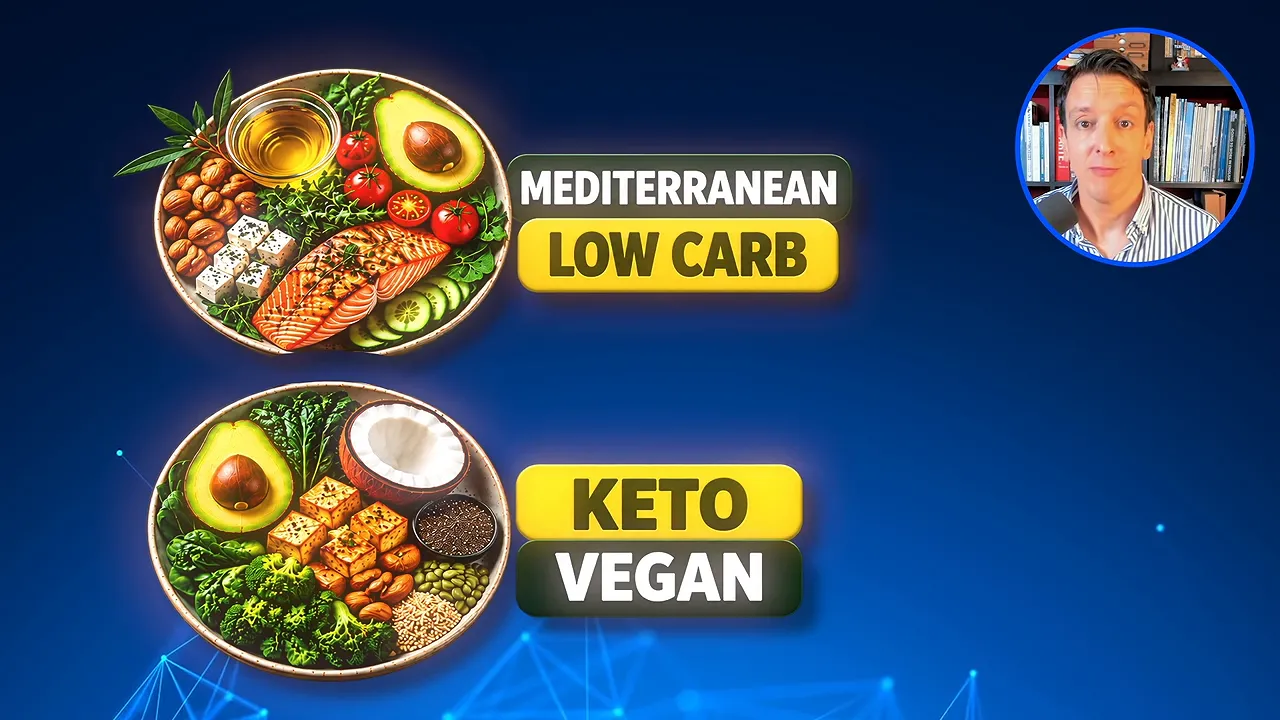
The most useful questions are not “Which diet wins?” or “Which camp should I join?” They are:
- Does this pattern have evidence relevant to my health goals?
- Am I choosing a high-quality version rather than merely following exclusions?
- Does it provide the nutrients I need?
- Can I realistically maintain it?
Mediterranean eating earns my highest overall score because it combines strong outcome evidence with flexibility. But that does not make it the right answer for every person or every condition. Find the combination that works for you, without asking a diet label to do the work of good food choices.
This information is educational, not a substitute for medical advice, diagnosis, or treatment. Discuss dietary changes related to a medical condition with your physician or another qualified health professional.


