Nattokinase has been getting a lot of attention on social media for heart health. Depending on whose claims you come across, it can sound like a supplement that dissolves blood clots, lowers cholesterol, and clears plaque out of your arteries.
There is some genuinely interesting science here. But promising evidence and proof of a health benefit are not the same thing, and a lot of the online enthusiasm skips right over that distinction.
Full disclosure: I don’t sell supplements or prescription pills, and I have no conflicts of interest here. I don’t personally take nattokinase. I think the hype has outpaced the evidence, although reasonable people may interpret the available findings differently.
To understand why, we need to separate what nattokinase does in a laboratory, what it changes in humans, and whether it actually prevents the health problems we care about.
Key Takeaways
- Nattokinase probably modestly lowers blood pressure, but effects on cholesterol and glucose are inconsistent.
- Claims that nattokinase reverses artery plaque rely on evidence with substantial limitations.
- Proper clinical trials have not established whether nattokinase prevents heart attacks, strokes, or death.
- Nattokinase affects clotting, making medical guidance especially important for people at risk of bleeding.
Table of Contents
- What Is Nattokinase, and Where Does It Come From?
- Encouraging Animal Results Are Only the Beginning
- Level 1: Blood Pressure, Cholesterol, Glucose, and Clotting
- Level 2: Does Nattokinase Reduce Artery Plaque?
- Level 3: Does Nattokinase Prevent Heart Attacks, Strokes, or Death?
- Why Not Take It Just in Case?
- Nattokinase Side Effects and Safety Precautions
- What About Eating Natto Itself?
- The Bottom Line
What Is Nattokinase, and Where Does It Come From?
Nattokinase is an enzyme isolated from natto, a food made from fermented soybeans that is particularly popular in Japan.
Natto is also an acquired taste. Some people consider it a delicacy. I’ve tried it, and “funky” would be a polite description. Its sticky texture and distinctive flavor can take some getting used to.
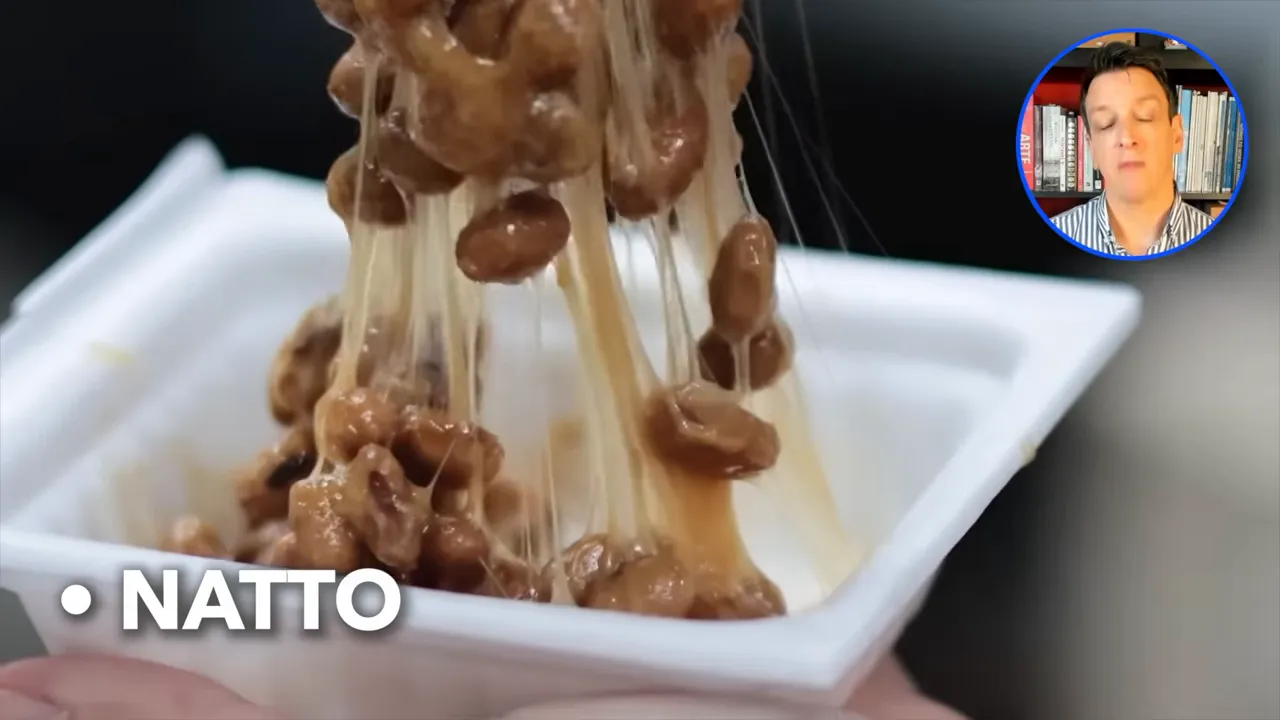
The scientific story is fascinating. In the 1980s, researchers found that extracts of natto could dissolve blood clots in the laboratory. They then isolated the enzyme responsible and named it nattokinase.
That discovery provided a plausible reason to investigate cardiovascular benefits. Blood clot formation, also called thrombosis, plays a role in many acute heart attacks. Could taking a supplement with clot-breaking activity help prevent them?
That is a good research question. It is not, by itself, an answer.
Encouraging Animal Results Are Only the Beginning
In animal studies, nattokinase has produced an impressive collection of findings. Researchers have reported clot dissolution, lower cholesterol, lower blood pressure, and reduced plaque in artery walls.
Those results are encouraging. They justify studying nattokinase in people.
But plenty of interventions that work beautifully in mice or rats fail to deliver the same benefits in humans. So the important question is not simply whether nattokinase has interesting biological properties. It is what happens when actual people take it.
I find it useful to organize the human evidence into three levels:
- Physiological markers: blood pressure, blood tests, and measures of clotting.
- Artery measurements: changes in plaque and artery wall properties.
- Clinical outcomes: heart attacks, strokes, and deaths.
This framework is useful well beyond nattokinase. You can apply the same questions to almost any supplement marketed for cardiovascular health.
Level 1: Blood Pressure, Cholesterol, Glucose, and Clotting
Blood pressure is probably the strongest finding
Among the proposed benefits of nattokinase, blood pressure reduction has some of the stronger human evidence. Positive trials have found a modest reduction in systolic blood pressure, the upper number in a blood pressure reading, often around 5 mmHg.
One complication is that the studies use different doses. Nattokinase activity is measured in fibrinolytic units, or FU. These units describe its clot-breaking potency, rather than simply the weight of the supplement.
- 2,000 FU: A commonly studied dose. Some trials report systolic reductions of roughly 3 to 5 mmHg, while others find no significant effect.
- 3,600 FU: One trial reported a larger systolic reduction of about 7 mmHg.
There may be a dose-dependent effect, with higher doses producing a larger reduction. But one higher-dose trial is not enough to establish that relationship confidently. A randomized blood pressure trial is part of the research behind this line of investigation.
My reading is that nattokinase probably has a modest blood pressure-lowering effect, but it is not a consistent result across all trials.
Cholesterol and triglyceride results are less convincing
For blood lipids, the picture is messier.
Trials using 2,000 FU generally find no effect on cholesterol or triglycerides. The trial using 3,600 FU reported reductions in total cholesterol, LDL cholesterol, and triglycerides.
However, studies using still higher doses, including approximately 6,000, 7,000, and 8,000 FU, have produced inconsistent findings. Some show improvements; others do not.
That is important because the story is not simply “the higher the dose, the better it works.” A reliable cholesterol-lowering effect has not been established.
Blood sugar findings are also uncertain
The glucose results follow a similar pattern. Trials using 2,000 FU generally show no effect, while the 3,600 FU trial reported lower glucose levels.
That makes a glucose-lowering effect possible, but far from settled.
Effects on clotting are more consistent, but not automatically beneficial
Human studies more consistently report changes in markers related to coagulation, generally in the direction of slower clotting.
It is tempting to interpret that as an unqualified benefit. After all, if clots can trigger heart attacks, less clotting sounds good.
But clotting is also what prevents us from bleeding excessively. An effect that might help in the context of thrombosis could be harmful in someone prone to bleeding. A hemorrhagic stroke, for example, involves bleeding from a blood vessel into surrounding tissue.
So the relevant question is not merely, “Does it affect clotting?” It is, “For this person, does that effect produce more benefit than harm?” Blood tests alone cannot answer that.
Level 2: Does Nattokinase Reduce Artery Plaque?
This is where some of the most aggressive online claims appear. It is also where study design becomes especially important.
The widely promoted study of more than 1,000 people
A Chinese study involving 1,062 participants reported substantial reductions in plaque measurements, cholesterol, and triglycerides among people taking high doses of nattokinase, above 10,000 FU. Those taking a lower dose of around 3,600 FU did not show the same benefits.
Interesting? Absolutely. Proof that nattokinase reverses atherosclerosis? No.
There are several major limitations:
- The findings have not been independently reproduced. A striking result becomes much more convincing when other research groups can repeat it.
- There was no randomization. Participants were not randomly assigned to treatment groups.
- There was no placebo group. The study lacked that comparison for judging the supplement’s effect.
- It was retrospective. Researchers looked backward at people who had already been taking nattokinase.
A retrospective cohort study can identify relationships, but it is vulnerable to biases that make cause and effect difficult to establish. It differs fundamentally from starting with participants, randomly assigning an intervention, and following them forward.
These studies can be useful because they are easier and cheaper to conduct. We often describe them as hypothesis-generating: they suggest ideas worth testing in more rigorous trials.
They are not the kind of evidence I would want to carry an important treatment decision on their own. When someone says, “There’s a study showing amazing results,” the next question should be, “What kind of study?”
The placebo-controlled trial found no benefit at 2,000 FU
A randomized, placebo-controlled trial conducted at USC tested nattokinase at 2,000 FU. It found no meaningful changes in plaque or artery wall properties, and no improvements in the measured risk markers such as blood pressure and cholesterol.
That is a disappointing result for that dose. But it does not settle what happens at higher doses.
The balanced interpretation is that this trial provides no support for the tested regimen, while leaving the higher-dose question open. Neither dismissing all nattokinase research nor declaring that higher doses must work is justified.
A small comparison with simvastatin deserves follow-up
Another small trial is less frequently discussed, but I find it particularly interesting. Researchers compared a group receiving approximately 6,000 FU of nattokinase with a group receiving the statin simvastatin.
Both groups showed reductions in plaque size, and the nattokinase group appeared to show a larger reduction.
However, this was a pilot study with only roughly 30-something participants per group. It also lacked a placebo group, although it did have an active treatment comparison.
That is a reason to run a larger, properly controlled trial, not a reason to replace a prescribed statin with nattokinase. A well-designed study testing doses in the 6,000 to 10,000 FU range would be valuable. Those are research doses under discussion, not an established dosing recommendation.
Level 3: Does Nattokinase Prevent Heart Attacks, Strokes, or Death?
This is the most important level of evidence, and it is the biggest gap.
Ultimately, we do not take a pill because we want a more attractive laboratory report or a different-looking artery image. We want to avoid heart attacks, strokes, angina, disability, and premature death.
Changes in blood tests and plaque measurements matter because they may tell us something about those risks. But they are not substitutes for directly testing the outcomes.
The evidence reviewed here includes no proper clinical outcome trial demonstrating that nattokinase prevents heart attacks, strokes, or death.
There is a very small preliminary study involving people recovering after a stroke, with reports of improvement. But without an adequate control group, it cannot tell us whether nattokinase caused that recovery.
So the evidence currently supports a much narrower conclusion than many online claims suggest:
- Nattokinase probably modestly lowers blood pressure, although results vary.
- It affects markers related to blood clotting.
- Plaque reduction is an interesting possibility that has not been convincingly established.
- Whether it prevents cardiovascular events remains unknown.
Why Not Take It Just in Case?
That is a fair question. Do we really need to wait until every uncertainty is resolved?
No intervention comes with perfect evidence. But when clinical outcome data are missing, the net effect can still go in any direction: beneficial, neutral, or harmful.
We have seen treatments produce exciting early findings, only for larger trials to reveal no benefit or even net harm. One reason is that an intervention can have effects beyond the particular markers being measured.
Lowering one number does not automatically tell us what happens to the whole person.
That is why I find nattokinase promising enough to deserve better trials, but not convincing enough to take myself. I also have not recommended it to family members who have plaque.
Nattokinase Side Effects and Safety Precautions
The available studies have not reported large numbers of side effects. Within the sizes and durations of the trials conducted, nattokinase has generally appeared reasonably well tolerated.
That is reassuring, but it is not the same as establishing long-term safety or ruling out uncommon harms.
There are isolated case reports of bleeding events in people taking nattokinase. Those reports deserve attention, but they do not establish that the supplement caused the bleeding. Case reports can raise a concern; they cannot reliably determine causation.
Given its effects on clotting, I would be particularly cautious if you:
- Have a tendency to bleed.
- Take anticoagulants or other blood-thinning medication.
- Are preparing for surgery.
Talk with your doctor before taking nattokinase, especially in any of these situations.
What about using it specifically for blood pressure?
Blood pressure reduction is probably the strongest argument for nattokinase. But I still weigh it against the alternatives.
We have other approaches with stronger evidence, including dietary changes and specific forms of exercise, some of which can produce larger blood pressure reductions. For me, nattokinase does not offer a compelling advantage.
For transparency, my own cardiovascular treatment includes pitavastatin and ezetimibe, and some family members take rosuvastatin. I have explained my reasoning for pitavastatin and ezetimibe separately. Those personal choices are not a prescription for anyone else.
Your decision may differ. The important thing is that it reflects the actual strength of the evidence, rather than an exaggerated version of it.
What About Eating Natto Itself?
The food and the isolated supplement are separate questions.
Several observational studies have found that people who eat more natto have a lower risk of dying from cardiovascular disease. These associations remain after statistical adjustments for factors such as smoking and exercise.
Examples include the Takayama study of natto intake and cardiovascular mortality and a large Japanese study of soy foods and mortality.
Those findings are encouraging, but they remain observational. They do not prove that natto itself caused the lower risk, and they certainly do not establish that an isolated nattokinase supplement will reproduce the association.
Natto also contains much more than nattokinase. It provides:
- Vitamin K2.
- Isoflavones.
- Protein.
- Fiber.
It is also a fermented food containing live microorganisms. Any health associations could involve the food as a whole, rather than a single enzyme.
There is an important medication caveat: if you take warfarin, speak with your doctor before adding natto to your diet. It can interfere with that medication.
Scientifically, natto is an interesting food. Culinarily, I’m still waiting for a version that is a little less reminiscent of a gym bag.
The Bottom Line
Nattokinase is neither a proven cardiovascular miracle nor an uninteresting supplement. It has plausible biological effects and enough encouraging findings to warrant serious research.
What it does not yet have is convincing evidence that taking it prevents heart attacks, strokes, or death. Higher-dose plaque findings need better-controlled replication, and effects on cholesterol and glucose remain inconsistent.
My position is straightforward: more research, less hype. Until stronger trials clarify the benefits and risks, I prefer approaches supported by more complete evidence.
This article is for educational purposes and is not a substitute for individualized medical advice, diagnosis, or treatment. Discuss supplements and medication decisions with your qualified healthcare professional.


