Can you build muscle and get stronger by taking creatine, even if you don’t work out? That is the provocative claim behind a new study making headlines. Take a powder, skip the gym, and still get the benefits. Getting jacked from the couch would be quite a development.
The findings are interesting. But once we look beyond the headlines, there are several reasons to be cautious, from inconsistencies in the reporting to questions about what was actually measured and how sedentary the participants really were.
My bottom line: this study raises an intriguing possibility, but it does not convincingly establish that creatine builds muscle without training. Here is why.
Key Takeaways
- A small trial reported creatine benefits without structured training, but important uncertainties limit confidence.
- DEXA lean-mass gains cannot distinguish additional muscle water from newly built muscle tissue.
- Reporting inconsistencies, numerous comparisons, and baseline activity differences complicate interpretation.
- Creatine’s benefits alongside exercise are better established than its benefits without training.
What Did the Creatine Study Actually Test?
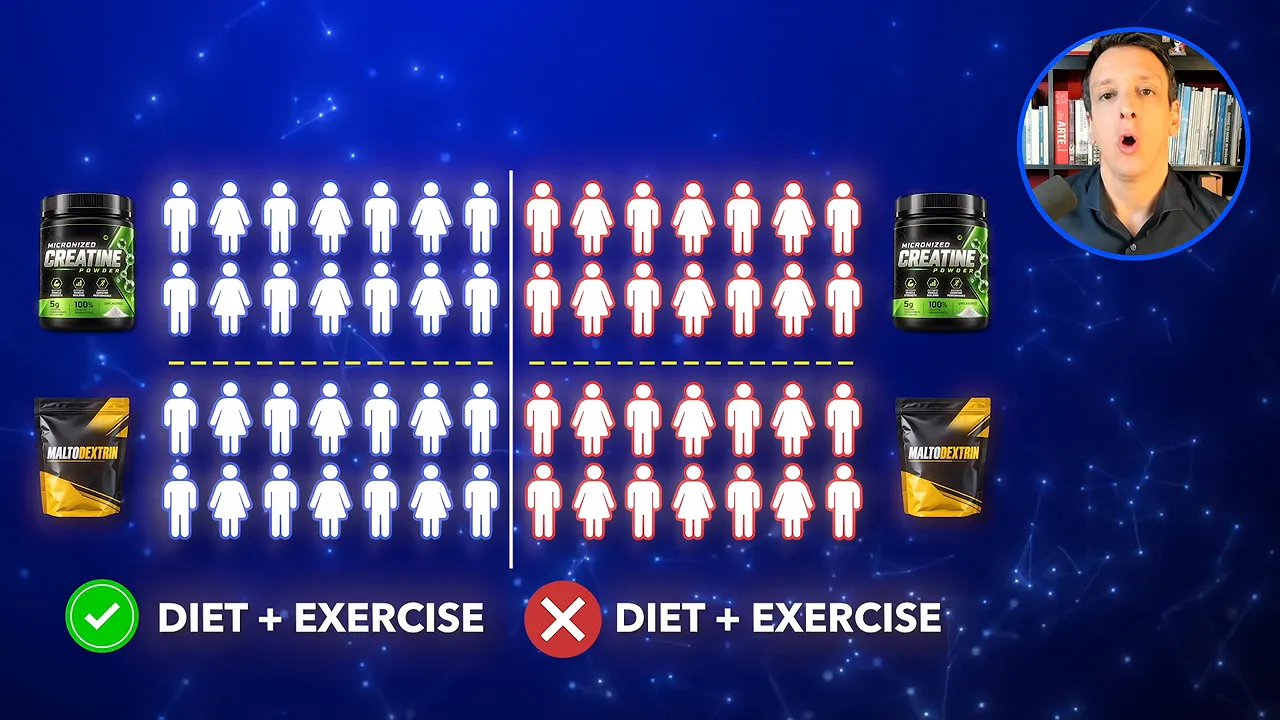
The clinical trial enrolled 73 healthy adults between 45 and 65 years old. Participants first chose whether they wanted to join a diet and exercise program. The exercise component involved cardio and resistance training three times a week.
That first division matters: people chose whether to enter the lifestyle program. They were not randomly assigned to exercise or not exercise.
Within each of those two groups, however, participants were randomly assigned to receive either creatine or a placebo. This produced four groups:
- Diet and exercise plus creatine.
- Diet and exercise plus placebo.
- No structured diet and exercise program plus creatine.
- No structured diet and exercise program plus placebo.
The placebo was maltodextrin, another white powder, so participants could not readily distinguish it from creatine. The creatine dose was relatively high: 10 grams per day, taken as 5 grams twice daily. Participants followed their assigned treatments for 12 weeks, or about three months.
For context, many creatine studies use 3 to 5 grams per day. The higher dose makes this trial worth examining. It raises the possibility that a different dose could produce effects not consistently seen in other research. But that remains a possibility, not a demonstrated explanation.
The Reported Benefits Were Impressive
Among people doing the diet and exercise program
The researchers reported that participants receiving creatine had greater improvements than those receiving placebo in several areas:
- Lean tissue mass.
- Reduction in body fat percentage.
- Muscular strength and endurance.
- Selected measures of cognitive function and memory.
Much of that fits what we already know. When people train and take creatine, they can build a little more muscle and gain a little more strength than with training alone.
There is also evidence suggesting benefits for brain function in some circumstances, particularly in older people or under stress, such as sleep deprivation. That does not mean every person gets a broad cognitive boost, but the idea itself is not new.
Among people not doing the program
This is where the headlines came from. The researchers reported that creatine, even without the structured diet and exercise intervention, increased lean tissue mass, strength, and muscular endurance. They also reported favorable changes in selected blood lipids, hemoglobin A1c, and some measures of cognition and memory.
If all of that holds up, it would be remarkable. I sincerely hope it does. But the more surprising a finding is, the more important it becomes to check whether the underlying results support the claim.
Concern 1: Some Claims Don’t Match the Results
The first problem is straightforward: some of the benefits claimed in the paper’s abstract are difficult to find in the actual data.
Take muscular endurance in the participants who did not join the lifestyle program. The researchers assessed this using exercise volume during leg press and bench press testing.
For leg press, the creatine group did not show a clear improvement over placebo. If anything, the plotted change was numerically lower with creatine, although the difference was not statistically significant.
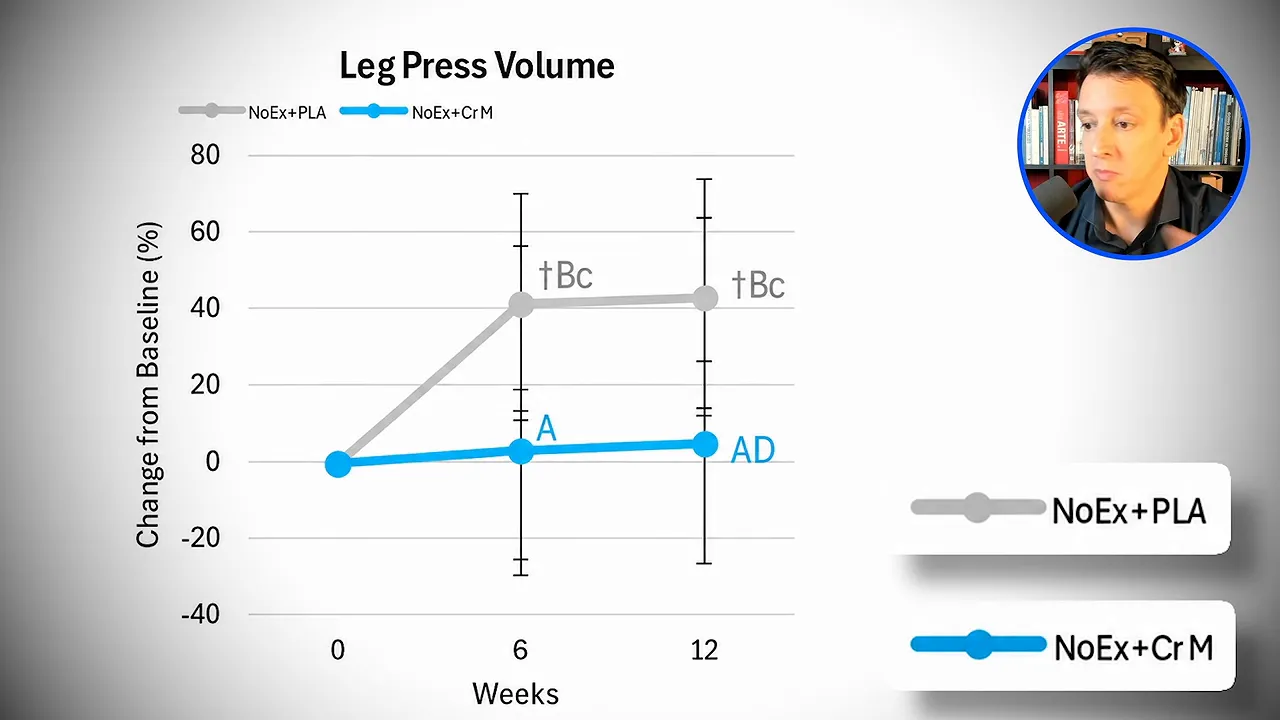
For bench press, the two relevant curves were almost identical. Again, no clear advantage for creatine. The corresponding results table did not indicate a statistically significant benefit either.
So how did improved muscular endurance end up in the abstract? I could not reconcile that claim with the results presented.
There were other reporting inconsistencies. Sometimes a figure indicated that a difference was statistically significant while the corresponding table did not. Elsewhere, the reverse occurred.
Figures 7 and 9 also appeared to contain the same plots, despite supposedly presenting different experiments. That looks like a formatting or production error, but it still makes the paper harder to interpret.
These discrepancies do not establish that the underlying research is wrong. They do mean that we need clarification before placing much confidence in the summary claims. Obvious inconsistencies making it past a large author team and peer review do not exactly inspire confidence.
Concern 2: More Lean Mass Does Not Necessarily Mean More Muscle
Even if we set those reporting issues aside and accept the claimed statistical differences, there is another important distinction: lean tissue mass is not the same thing as newly built muscle protein.
The researchers used DEXA scans to measure body composition. In the creatine group that did not join the lifestyle program, lean tissue mass increased by about 1.1 kilograms over 12 weeks.
That sounds like muscle growth. But DEXA cannot tell us how much of that increase represents additional muscle tissue versus additional water within that tissue.
And creatine draws water into muscle cells. This is a known effect, not a speculative objection.
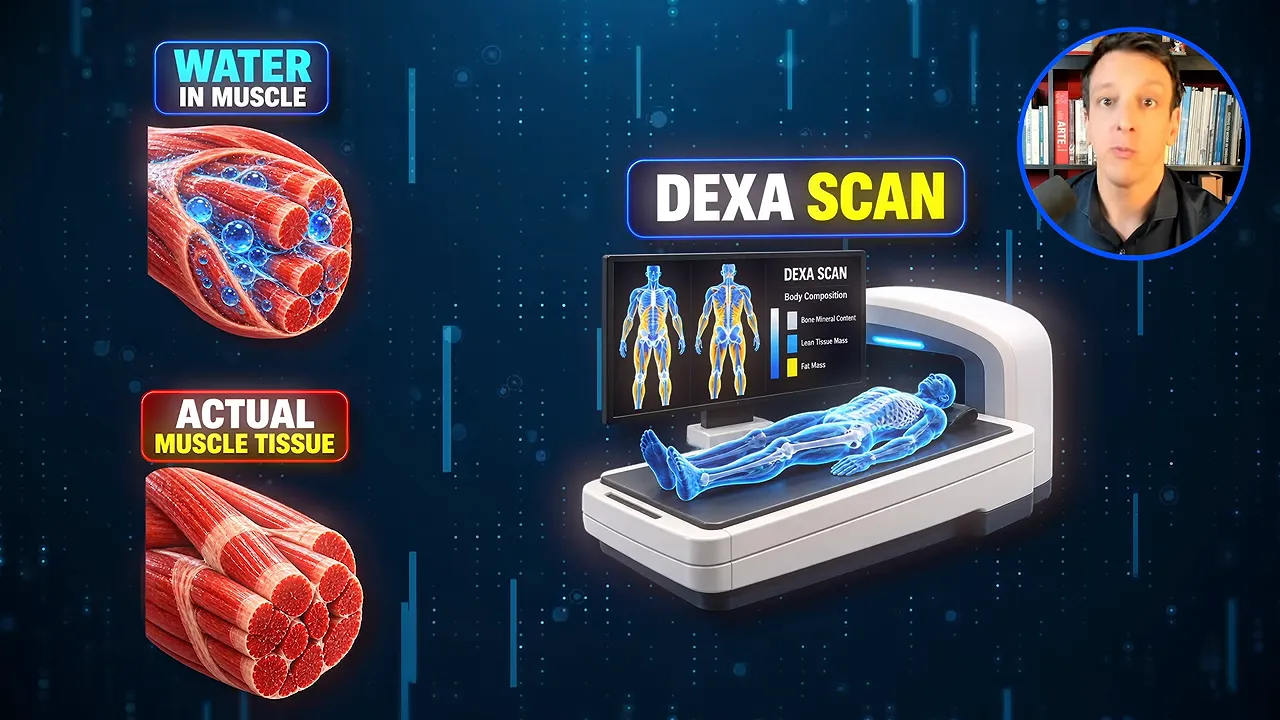
So the scan result leaves a crucial question unanswered: how much actual muscle did these participants build, if any?
The increase could include water, muscle tissue, or some combination. These measurements do not allow us to confidently divide it up. Translating a 1.1-kilogram increase in lean mass into “1.1 kilograms of muscle gained without exercise” would go beyond what the study can show.
Concern 3: Lots of Tests Increase the Risk of Chance Findings
This was a long paper with a very large number of measurements. The cognition and memory section alone included more than 40 graphs or metrics.
Doing a lot of work is not a problem. Measuring many outcomes can be useful. The issue is what happens statistically when researchers make dozens of comparisons.
The more comparisons you make, the greater the chance that something will look statistically significant just by chance. That is a false positive: an apparent effect that does not reflect a real treatment benefit.
Researchers can address this using statistical adjustments for multiple comparisons. The Bonferroni correction is one example. This trial did not apply that kind of correction across the many comparisons at issue.
As I went through the graphs, most showed no difference between creatine and placebo, particularly among people not participating in the lifestyle program. A few significant findings scattered among dozens of comparisons raise an obvious question: are these genuine effects, or are at least some chance results?
To their credit, the authors explicitly described individual cognitive and biomarker findings as exploratory and cautioned against overinterpreting them. That qualification deserves as much attention as the exciting results.
Exploratory findings are useful for generating questions for future research. They are not the same as strong confirmation that creatine improves memory, blood sugar, or blood lipids without exercise.
Concern 4: The Headline Comparison Had Only 13 People per Group
The study began with 73 participants, and 64 completed it. That is not a bad completion rate. But the relevant sample size is not simply the total number enrolled.
Remember, the participants were divided into four groups. Most groups ended up with fewer than 20 people.
The two groups behind the most surprising claims, those not participating in the diet and exercise program, had just 13 participants each.
With groups that small, individual differences can have a substantial influence on the results, and estimates can be unstable. Add dozens of comparisons, and isolated positive results become harder to trust.
A small trial can identify a real effect. But this combination of small groups, many outcomes, and reporting inconsistencies calls for replication rather than a sweeping conclusion.
Concern 5: “No Exercise Program” Did Not Mean “No Physical Activity”
There is one more issue that directly affects the central claim. The paper described participants as sedentary, but their baseline activity reports tell a more complicated story.
Among those who declined the diet and exercise program, the groups differed before supplementation began:
- Vigorous activity: the placebo group reported zero days per week on average, compared with roughly one day per week in the creatine group.
- Moderate activity: the placebo group reported about 0.3 days per week, compared with about 1.7 days per week in the creatine group.
Both baseline differences were statistically significant. In other words, the people who happened to receive creatine were already more physically active than those who received placebo.
This can happen by chance after randomization, especially with only 13 people per group. Random assignment helps balance groups, but it does not guarantee that every relevant characteristic will be balanced in a small trial.
At six and 12 weeks, the reported activity differences were no longer statistically significant. So perhaps the initial imbalance did not meaningfully affect the outcomes. We cannot simply assume that it explains the findings.
Still, it is a relevant concern. Several plotted changes occurred mainly in the first six weeks, followed by a plateau or even a decline. If some participants entered the study doing more activity, including vigorous activity, creatine could potentially have interacted with that activity to produce early benefits.
Not enrolling in a structured training program is not the same as doing no exercise. That distinction gets lost when the result becomes “creatine builds muscle while you sit on the couch.”
What Can We Actually Conclude About Creatine Without Working Out?
I find this trial interesting, and the high-dose question is worth pursuing. Could 10 grams of creatine per day provide meaningful benefits without structured training? Maybe. I would like to see that question tested again, with larger groups and clearer reporting.
But this study leaves too many uncertainties to treat the answer as settled:
- Some summary claims do not clearly match the reported data.
- Lean-mass measurements cannot separate added water from new muscle tissue.
- Numerous comparisons make isolated positive findings difficult to interpret.
- The most discussed groups contained only 13 people each.
- The creatine group was more active at baseline.
None of this erases the broader evidence for creatine. Taken alongside exercise, creatine can improve strength, help build more muscle, support recovery, and improve athletic performance. It also appears to help brain function in certain contexts.
Whether those same benefits occur without training is a separate question. This trial gives us a reason to investigate, not a reason to replace exercise with a scoop of powder.
I hope the surprising findings turn out to be real. Right now, I’m not convinced yet.
This article is for informational purposes and is not medical advice. The 10-gram dose described here is a study protocol, not an individualized recommendation. Discuss supplement decisions and medical questions with a qualified health professional.


